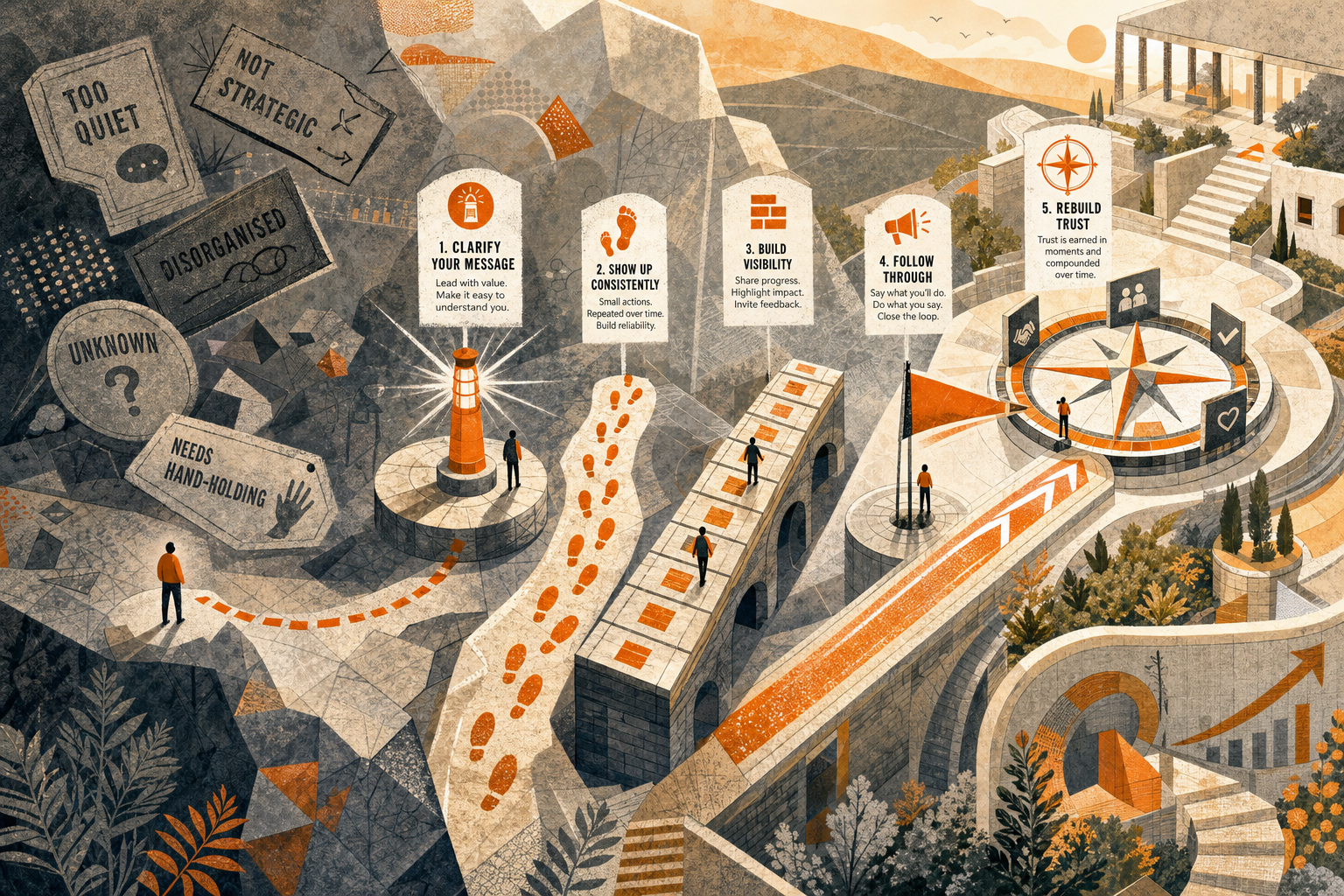
Got a Verbal Warning at Work? What to Do Next
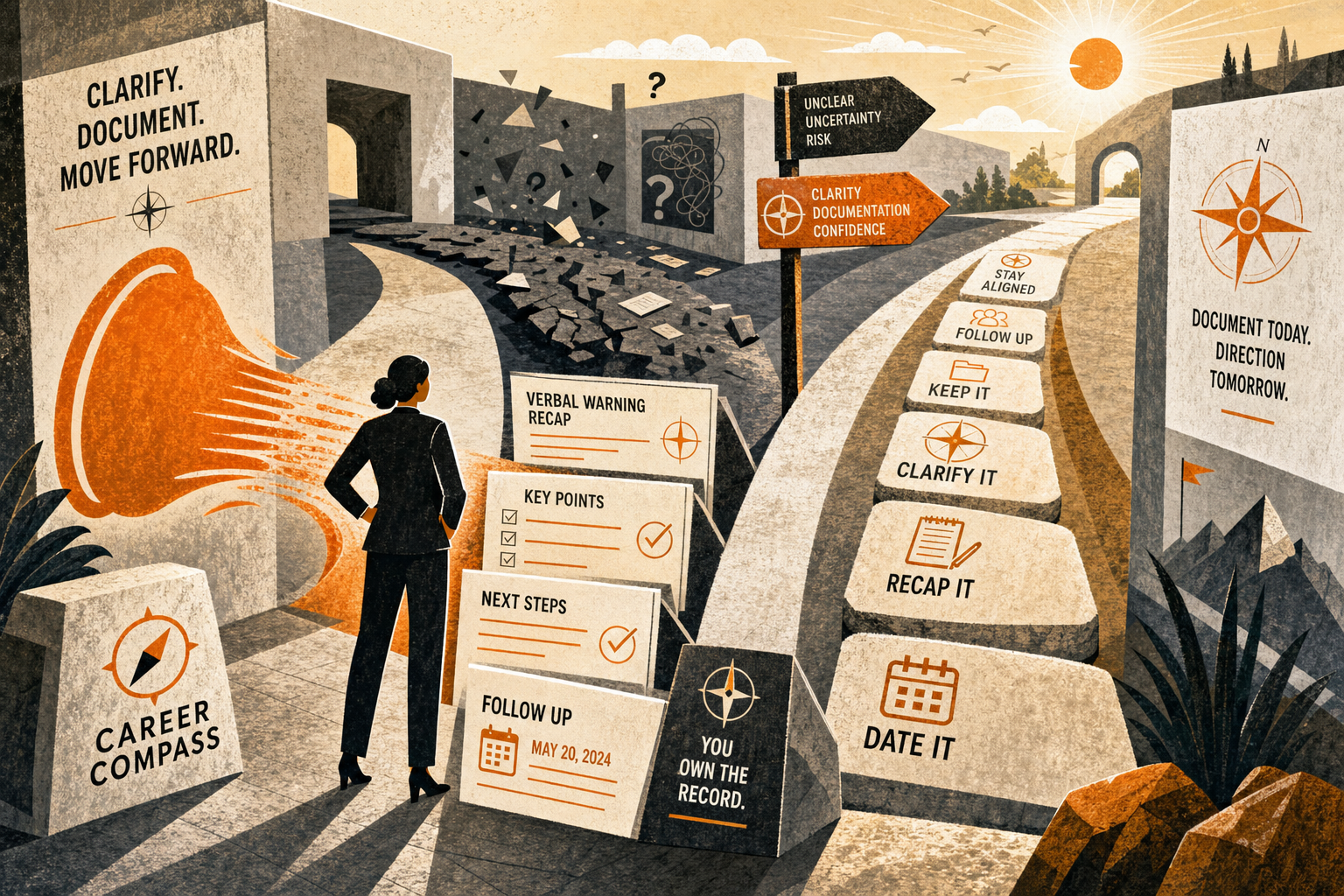
Got a Verbal Warning at Work? Here’s What to Do in the Next 24 Hours
A verbal warning is one of those office moments that can turn a normal Tuesday into a full-body emergency.
You walk into a meeting expecting the usual: project updates, a mildly annoying status check, maybe a reminder about deadlines. Then your manager says, in that careful corporate voice, “I want to talk about a concern.” And just like that, your nervous system clocks in before your logic does. Your face goes hot. Your stomach drops. You start mentally replaying the last three weeks like security footage.
That reaction is human. It is also a terrible strategist.
The first 24 hours after a verbal warning are not about proving you are a good employee, a misunderstood genius, or the victim of bad vibes. They are about getting specific. What exactly happened? What standard did they say you missed? What changes now? How will anyone decide whether you fixed it?
Because here is the part people underestimate: “verbal” sounds soft. In many workplaces, it is not soft at all. It is simply the first version of a paper trail.
TL;DR
- A verbal warning can be calm in tone and serious in consequence.
- Your first job is not self-defense. It is clarification.
- Send a recap email the same day so the facts stop floating around loose.
- Figure out whether you are dealing with a clear performance issue or a vague political one.
- If expectations are murky, stop trying to rescue the situation with effort alone. Start documenting.
What a verbal warning actually means
A verbal warning is not the same thing as ordinary feedback, and treating them like twins is how people get blindsided.
Regular feedback sounds like, “Your client notes need more detail,” or “Please respond faster in the team channel.” That is coaching. A verbal warning means someone has decided the issue is now serious enough to mark, remember, and possibly escalate later. It might be about attendance, recurring mistakes, missed deadlines, conduct, reliability, or judgment.
The danger is that a lot of managers deliver verbal warnings in a tone usually reserved for discussing printer paper. Friendly voice, light eye contact, maybe even a reassuring “I just wanted to flag this early.” Meanwhile, somewhere in a system you will never see, the conversation may already be logged as a performance concern.
So stop obsessing over whether it “counts.” Assume it counts enough to handle carefully.
A better question is: did you leave that meeting with facts, or with a mood? If all you got was a fog bank — “people have concerns,” “I need more ownership,” “your overall approach hasn’t been landing” — then you do not merely have feedback. You have an information problem.
Sit with this tonight: if someone asked you to summarize the warning in three factual sentences, could you do it without guessing? If not, your next move is obvious. You need clarity, fast.
In the meeting, do not perform innocence
Most people hear a warning and immediately become their own defense attorney.
They explain context. They mention how overloaded they have been. They point out that other people also missed deadlines. They apologize too much or too early. They speak in long, frantic paragraphs because silence feels incriminating.
Understandable. Still a mistake.
The meeting is not a courtroom, and it is not confession. It is a fact-finding mission. Your goal is to leave with something more useful than dread.
Ask questions that force the conversation to become concrete:
- “Can you walk me through the specific examples?”
- “What would meeting expectations look like from here?”
- “What needs to change immediately?”
- “How will progress be evaluated?”
- “Is this an informal correction, or part of a formal process?”
That last question matters more than people think. Some managers hate process language because it makes the conversation feel official. Too bad. If they are warning you, official is already in the room.
And if your manager keeps drifting into mush — “It’s more about your presence,” “there’s a general concern,” “it’s hard to quantify” — pull them back to observable behavior. What happened? When? What should you have done instead?
You are not being difficult. You are refusing to accept horoscope-based management.
The emotional hangover is real. Do not let it rewrite the facts.
After a verbal warning, there is often a grim little aftershock.
You return to your desk and suddenly everything looks sinister. That Slack message with the period at the end. The teammate who seemed brisk in yesterday’s meeting. The one-on-one your manager rescheduled last week. Your brain starts building a conspiracy board out of office trivia and half-memories.
This is the same brain that, on Sunday night, can turn “busy week ahead” into “my entire career is collapsing.” It is not your best investigator.
Name what is happening. You feel embarrassed. Threatened. Exposed. Maybe angry, especially if the warning felt late, unfair, or weirdly theatrical. Maybe ashamed, because even competent people can regress instantly when they feel judged. Fine. Feel all of that.
Then get operational.
Open a document and write down everything you remember from the meeting while it is still fresh: examples given, exact wording, any timeline mentioned, any part that sounded vague or contradictory. Do it before texting five friends and letting their theories colonize your memory. The point is not literary beauty. The point is preserving evidence before panic edits it.
If you do nothing else in the first hour, do that.
Your most important move today: the recap email
This is the hinge point.
A same-day recap email is boring, which is exactly why it works. It shows professionalism, creates a timestamped record, and gives your manager a chance to confirm or correct the facts in writing. That is not petty. That is adult.
Keep it short. Calm. Almost dull.
Hi [Manager],
Thanks for meeting today. I wanted to recap my understanding of the feedback we discussed.My understanding is that the concerns were [specific issue], including [example 1] and [example 2]. Going forward, the expectation is that I [specific standard]. You mentioned we’d review progress over [timeline].
Please let me know if I missed or misunderstood anything. I’m focused on addressing it.
Thanks,
[Name]
Notice what this email does not do. It does not debate. It does not self-flagellate. It does not contain the phrase “I’m sorry if.” It simply pins the conversation to the page.
Send it before the workday ends. Not tomorrow morning after a sleepless night and a dramatic notes app monologue. Today.
Then, over the next week or two, send brief updates where relevant: you changed the process, confirmed the priority, met the deadline, corrected the issue. Quiet improvement is noble and invisible. Visible improvement is what helps you.
Figure out which problem you actually have
When people get a warning, they ask, “How bad is this?”
Reasonable question. Not the useful one.
The useful question is: what kind of situation am I in?
Pattern 1: clear, fair, fixable
This version is unpleasant but workable. The examples are specific. The expectation makes sense. The timeline is clear. You may not like the feedback, but you can understand it without hiring a codebreaker.
Maybe you have been missing deadlines. Maybe your communication is sloppy. Maybe your work keeps coming back with preventable errors. That stings, especially if you thought you were doing fine. But it is fixable, because a real standard exists.
If that is your situation, stop making it existential. Treat it like a performance problem, not a character indictment. Identify the behavior that matters most and build one concrete system around it. If the issue is deadlines, start flagging risks earlier. If the issue is responsiveness, send updates before anyone has to chase you. If the issue is mistakes, create a pre-send checklist and actually use it.
The move this week is to change one visible behavior and tell your manager what changed. Do not assume improvement speaks for itself. Work is not jazz; people need to hear the melody.
Pattern 2: vague, shifting, political
This version feels like trying to improve at a game where the rules are announced after each round.
The examples are thin. The standard keeps moving. One week the issue is speed. Next week it is tone. Then it is “executive presence,” that beloved catch-all for “I am uncomfortable but not precise.” You leave conversations feeling not corrected but destabilized.
This is when people often start working harder in all directions at once. Longer hours. Faster replies. More eagerness. More accommodation. They become a human offering plate.
It usually does not work.
Hard work can solve a real performance issue. It cannot solve an incoherent evaluation system. If expectations are unstable, your labor will not magically turn them stable. It will just make you tired enough to blame yourself for the confusion.
So ask yourself plainly: am I being given a target, or am I being given fog?
If the answer is fog, your job changes. You are no longer just trying to improve. You are trying to create a record clear enough to survive bad management.
If it’s fixable, review your work like game tape
Once the panic burns off, clear performance issues are often less mysterious than people make them.
The warning usually traces back to a repeatable failure point in your workflow. You overcommit. You wait too long to ask clarifying questions because you want to look competent. You do the work but fail to communicate status. You rely on memory instead of systems. You rush the final pass and ship small mistakes that add up to “can’t fully trust this.”
None of that requires a dramatic reinvention. It requires process.
Look at the exact moment the problem begins. Not the final explosion — the earlier miss that made the explosion likely. If the issue is missed deadlines, is the real problem that you do not surface risk early enough? If the issue is quality, are you skipping a review step because everything feels urgent? If the issue is communication, are you assuming people know what you know?
Pick one failure point and redesign it. Put the deadline check on your calendar two days earlier. Draft updates before people ask. Use a checklist before sending work out. Confirm the deliverable in writing when an assignment is fuzzy.
Professionals recover from warnings all the time. Usually not through charisma. Through boring systems.
If it’s murky, start collecting receipts
When the feedback is vague, your documentation needs to become extremely unglamorous and extremely good.
Keep a private log with dates, examples, instructions, feedback, contradictions, and notable interactions. Save emails. Save relevant Slack messages. After spoken conversations, send short summaries. If expectations change, write down when and how they changed.
No, this does not make you paranoid. It makes you less easy to gaslight.
This matters especially if: - you keep getting “informal” warnings with no specifics - the criticism mutates every time you discuss it - your manager cannot define what success looks like - peers make similar mistakes without similar consequences - you suspect retaliation, favoritism, or discrimination
A lot of people avoid documenting because it feels dramatic. But the drama already happened. Someone warned you. Documentation does not create tension; it reveals what is already there.
Try This: create one simple record tonight — a notes file, spreadsheet, or document you can maintain — and start with today’s meeting. Future-you does not need perfect prose. Future-you needs dates.
Should you go to HR?
Maybe. But do not go to HR looking for emotional rescue.
HR is not a wise aunt with a mug of tea and a hidden authority wand. HR is a business function. Sometimes helpful, sometimes procedural, sometimes genuinely excellent, sometimes about as comforting as an airport kiosk.
Go when you need clarity on process or when something specific looks off.
Good reasons include: - you cannot tell whether the warning is formal - you asked for examples and did not receive them - expectations remain vague after follow-up - there is evidence of inconsistent treatment - you need to understand what documentation exists and how progress is assessed
If you contact HR, keep your language clean and factual. “I’d like clarity on whether this conversation is part of a formal performance process and how expectations are being documented” will get you further than “my boss is targeting me,” even if the latter is exactly how it feels.
And before you escalate, get a reality check from someone who has seen more workplaces than you have: a former manager, a mentor, a senior colleague with judgment. Early in your career, bad management can look normal simply because you have not yet built a comparison set.
A useful question here: if a competent, fair manager handled this issue, would it look like what just happened to me?
What not to do in the next 24 hours
Do not send a giant defense email.
Do not become weirdly grateful for the warning, like you are accepting a performance-themed hostage note.
Do not work until midnight in a frenzy and call that a plan.
Do not tell half the office and then act shocked when the story comes back with decorative additions.
Do not confuse self-punishment with accountability.
And do not let one verbal warning convince you that you are fundamentally bad at your job. Plenty of smart, capable people get corrected. Sometimes because they slipped. Sometimes because they were undersupported. Sometimes because a manager let concerns simmer until they became formal. Those are very different stories.
Use this filter instead: every move you make should increase clarity, improve performance, or preserve a record. If it does none of those things, it is probably just anxiety in business casual.
The bigger lesson hiding inside the warning
A verbal warning is almost never only about the incident itself.
Sometimes it reveals a genuine skill gap. Sometimes it exposes bad expectation-setting, weak communication habits, unmanaged workload, or a manager who has been silently collecting grievances instead of speaking up when the issue was still small. Sometimes it reveals your own habit of winging it because asking questions felt too risky. Sometimes it reveals that your workplace has no shared definition of “good,” only a rotating cast of complaints.
That is why the goal is not merely to survive this week. The goal is to stop building your career on guesswork.
If your work life regularly leaves you with that Sunday-night dread — the clenched feeling that Monday might contain another unpleasant surprise — you need better signals before things get formal. You need a way to notice when stress is rising, when manager trust is thinning out, when your workload is becoming sloppy-making, when your wins are invisible, and when “I’m probably fine” is turning into expensive denial.
That is where Career Compass fits naturally, not as a shiny add-on after the fact, but as a way to spot patterns before they become HR vocabulary. It gives you a structure for tracking the things people usually sense too late: stress, work-life balance, job satisfaction, manager relationship health, and whether your week-to-week work is actually moving you forward. In a moment like this, that matters because clarity is not just comforting. It is protective.
A verbal warning does not automatically mean you are on the way out. It does mean the era of vague hope is over. From here, you need facts, patterns, and decisions. Write down what happened. Send the recap. Decide whether you are fixing a real issue or navigating a murky one. Then act accordingly, without drama and without denial.
That is the mindset shift worth keeping: your career gets safer the moment you stop asking, “How do I make this feeling go away?” and start asking, “What does the evidence say, and what move gives me leverage?” That question will serve you long after this warning is forgotten.