Missed a Promotion? Here's Your Next Move

Missed That Promotion? Here’s Your Next Move
Picture this: you’ve been working hard, eyes on the prize, waiting for that well-deserved promotion. Your team knows you’re ready, you’ve hinted at it during your one-on-ones, and you’ve even done the extra legwork to make sure you’re the obvious choice. But here you are, watching someone else get the nod. Ouch, right? It feels a bit like being passed over in a game of dodgeball, except it’s your career and not just a gym class.
This sting is all too familiar for early-career professionals. It’s frustrating, disheartening, and might even make you question your entire career path. But before you hand in your resignation letter or start frantically updating your LinkedIn profile, take a deep breath. Missing out on a promotion doesn’t have to be a dead-end. Instead, it can be a powerful catalyst for growth—if you know how to harness it.
Here’s the kicker: missing a promotion is not a reflection of your worth. It's an opportunity to reassess, regroup, and launch into the next phase of your career with renewed vigor. So, let’s break it down step by step, transforming this setback into a strategic advantage.
TL;DR
- Feel the Feels: Allow yourself to feel disappointed, but don't let it define you.
- Get the Scoop: Schedule a meeting with your boss to get clear feedback.
- Mind the Gap: Analyze what skills or experiences you need to level up.
- Plan Your Comeback: Create a concrete action plan with specific goals.
- Keep the Conversation Going: Regular 1:1s with your manager to discuss your progress.
- Decision Time: Weigh your options—stay and grow, or explore new horizons.
- Flip the Script: Use this as a launchpad for personal and professional growth.
Embrace the Disappointment
Acknowledge Your Feelings
Missing out on a promotion hurts; it’s like being left out of the coolest party of the year. Allow yourself to feel that sting. But here's the crucial part: don't equate this setback with your self-worth. Remember, even the most successful people have faced rejection. Oprah was fired from her first TV job, and J.K. Rowling faced multiple rejections before hitting it big with Harry Potter. So, give yourself a moment to process, then channel that energy into action.
Perhaps you feel the knot in your stomach tighten as you watch someone else celebrate. It's okay to feel that. But remember, this is just one scene in the epic movie of your career. Let the disappointment wash over you, then let it wash away. You’re not defined by this moment; you’re defined by what you do next.
Avoid Rash Decisions
The temptation to storm out of your job in a blaze of glory is real. But hold your horses! Leaving without a plan can lead to more stress. Instead, focus on understanding the situation fully before making any drastic moves. Talk to mentors, weigh your options, and remind yourself that this is just one chapter in your career journey, not the whole book.
Imagine the satisfaction of leaving on your own terms, with a new opportunity lined up. That’s the kind of exit strategy that makes for a great story at your next job interview. So, resist the urge to make a dramatic exit and instead plot your next move with the precision of a chess grandmaster.
Seek Constructive Feedback
Schedule a Meeting
Approach your manager for feedback, but do it thoughtfully. Send an email like this: "Hi [Manager's Name], I’d love to discuss my performance and areas for growth. Can we schedule some time this week to chat?" This sets a professional tone and shows you're proactive about your development.
Ask the Right Questions
When you sit down with your manager, be specific. Instead of asking, “Why didn’t I get the promotion?” try, “What specific skills or experiences could I develop to be considered for future opportunities?” This shifts the focus from blame to growth.
Imagine the conversation as a treasure hunt, where each piece of feedback is a clue leading you to your ultimate goal. Don’t shy away from asking, “What does the ideal candidate for this role look like?” This not only gives you a clear target but also shows your manager that you’re serious about your career progression.
Listen and Reflect
It’s easy to become defensive, but resist that urge. Listen carefully to the feedback. Take notes, and ask for clarification if needed. This isn’t just about what your manager says—it’s about understanding the unwritten rules of your workplace and how you can navigate them.
Consider this meeting as a rare opportunity to peek behind the curtain of corporate expectations. The more you understand the landscape, the better you can tailor your approach and skills to meet those expectations. Reflect on the feedback as a map to guide your professional development.
Conduct a Gap Analysis
Identify Promotion Criteria
Research what’s required for the role you want. Does it need more leadership experience? Technical skills? A track record of successful projects? Make a list of these key criteria.
Assess Your Skills
Compare the role’s requirements with your current skills and experiences. Where do you excel? Where are the gaps? Be honest with yourself. Maybe you’re great at project management but need to work on your public speaking. Pinpoint 2-3 areas to focus on.
Think of this as a personal SWOT analysis—Strengths, Weaknesses, Opportunities, and Threats. Your strengths are your assets; your weaknesses, areas of potential growth. Opportunities might be projects you can volunteer for, and threats could be internal biases you need to overcome.
Develop Your Growth Areas
Once you’ve identified your gaps, create a plan to address them. This might mean taking a course, seeking out a mentor, or volunteering for projects that stretch your abilities. Remember, growth happens outside your comfort zone.
Imagine your career as a video game. Each new skill or experience is a power-up that brings you closer to the next level. Embrace the challenge, and soon you’ll be ready to tackle the boss fight that is your next promotion opportunity.
Build a Short-Term Action Plan
Set SMART Goals
Create a 3-6 month plan with specific, measurable, achievable, relevant, and time-bound (SMART) goals. For example, “Complete an advanced Excel course by the end of the quarter” or “Lead the upcoming client presentation.”
Find Accountability
Share your goals with a mentor or a trusted colleague. Regular check-ins will keep you accountable and provide additional insights or resources. Consider saying, “Hey [Name], I’m working on improving my [skill]. Can we meet monthly to discuss my progress?”
Imagine your mentor as your career personal trainer, pushing you to do that extra rep or run that extra mile. They’re there to support you, but also to challenge you to reach your full potential.
Track and Celebrate Wins
Document your achievements. Keep a journal or a digital log to regularly update with milestones. Celebrating small victories builds momentum and keeps you motivated.
Think of each achievement as a badge of honor. These are the stories you’ll tell in your next performance review, or even in future job interviews. They’re proof of your growth and determination, so don’t be shy about celebrating them.
Communicate Progress and Intention
Regular Check-Ins
Schedule regular 1:1s with your manager. Use these meetings to update them on your progress and ask for feedback. A script might be, “I’ve been focusing on [skill] and have completed [task]. Can we discuss my progress and any additional steps I should take?”
Document Everything
Don’t rely on memory alone. Keep detailed records of your accomplishments. This documentation will be invaluable during your next performance review or promotion discussion.
Consider this your personal career dossier. It’s your evidence of growth, your defense against any future setbacks, and your roadmap to success. Keep it detailed, keep it organized, and keep it ready.
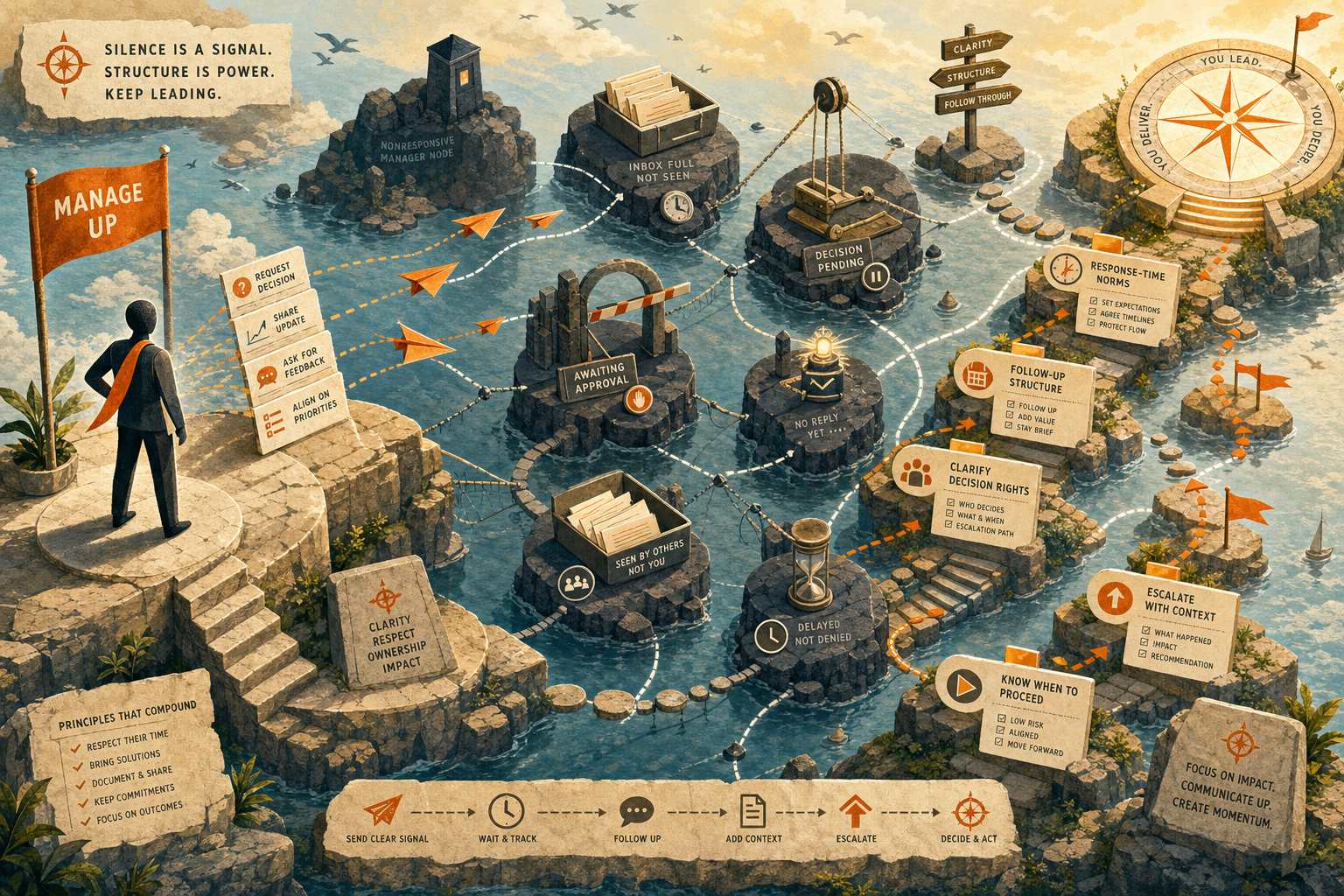
Manage Upward
Ask your manager, “How do you define success in this role?” Understanding their expectations allows you to align your actions more closely with what they value.
Managing upward is like being a skilled diplomat, navigating the complex world of office politics with grace and strategy. The more you understand your manager’s priorities, the better you can position yourself as an indispensable asset.
Decide: Stay or Go?
Assess Company Culture
Reflect on whether your company genuinely supports your growth. Do they provide learning opportunities? Do they value and recognize hard work? If not, it might be time to explore other options.
Consider Timing
How long is the next promotion cycle? Are there upcoming changes in the company that might affect your prospects? Timing is crucial, so make informed decisions based on the broader context.
Think of your career as a well-timed dance. Knowing when to make your move can mean the difference between stepping on toes and gracefully gliding across the floor. Timing is everything, so keep your ear to the ground and your eyes on the horizon.
Explore External Opportunities
If your current path seems stalled, start researching other companies or roles. Network with industry peers and attend events to gauge the market. But remember, the grass isn’t always greener—do your homework!
Imagine your career as a grand adventure, with each new opportunity a potential new chapter. Don’t be afraid to explore, but make sure you’re prepared for the journey. Research, network, and know what you want before you take the leap.
Turn Setbacks into Momentum
Seek New Challenges
Volunteer for cross-functional projects or take on leadership roles in team initiatives. This not only builds your skills but also increases your visibility within the company.
Refine Your Brand
Use this time to redefine your professional brand. Update your LinkedIn profile, engage in industry discussions, and showcase your expertise. Let the world know what you bring to the table.
Think of your brand as your professional calling card. It’s how the world sees you, so make sure it reflects your skills, your ambitions, and your unique personality. Stand out, and let your brand speak for you.
Keep Perspective
Remember, a missed promotion isn’t the end. It’s a stepping stone to something greater. Keep your eyes on the long-term vision, and use this experience to fuel your growth.
In navigating career setbacks, Career Compass can be your trusty co-pilot. By helping you build a personalized growth plan, track your weekly wins, and receive coaching nudges, Career Compass ensures that you’re not just moving forward, but moving forward with purpose.
Remember, every setback is a setup for a comeback. Use this experience to sharpen your skills, clarify your goals, and align your career path with your ambitions. You’ve got this. Whether you decide to stay and grow or explore new horizons, make sure it’s an intentional choice, aimed at moving you forward. Keep pushing, keep growing, and keep shining. The best is yet to come.