A Coworker Took Credit for Your Work. Now What?

A Coworker Took Credit for Your Work. Now What?
There is a very specific kind of office nausea that hits when someone else starts presenting work you built.
You hear your own idea come out of their mouth in a cleaner font. They click to the slide you stayed up fixing. They say “what we found” in that airy, collaborative tone people use right before your name disappears completely. And because you are a functioning adult trapped in a meeting, you have to keep your face neutral while your brain does three bad things at once: replay the timeline, question your sanity, and draft a speech you will probably never give.
Then comes the self-gaslighting.
Maybe this is normal. Maybe I’m being precious. Maybe speaking up will make me look junior, territorial, insecure, difficult — pick your poison.
That inner argument is why credit problems metastasize. Not because they are complicated. Because they are uncomfortable enough that smart people hesitate.
Here is the blunt version: if your work keeps getting separated from your name, that is not a personality annoyance. It is a career leak. People do not evaluate you from some mythical complete record of your talent. They build a rough story from scraps — who seems to drive things, who gets named in recaps, who senior people associate with good judgment, who appears to lead when the room is moving fast. If someone else keeps becoming the face of your contribution, the organization will make up a version of your value that is smaller than the truth.
So forget the fairy tale that “great work speaks for itself.” It doesn’t. Work sits there silently like a chair. People narrate what happened. Meetings narrate what happened. Slack recaps narrate what happened. The person holding the deck is practically writing history in real time.
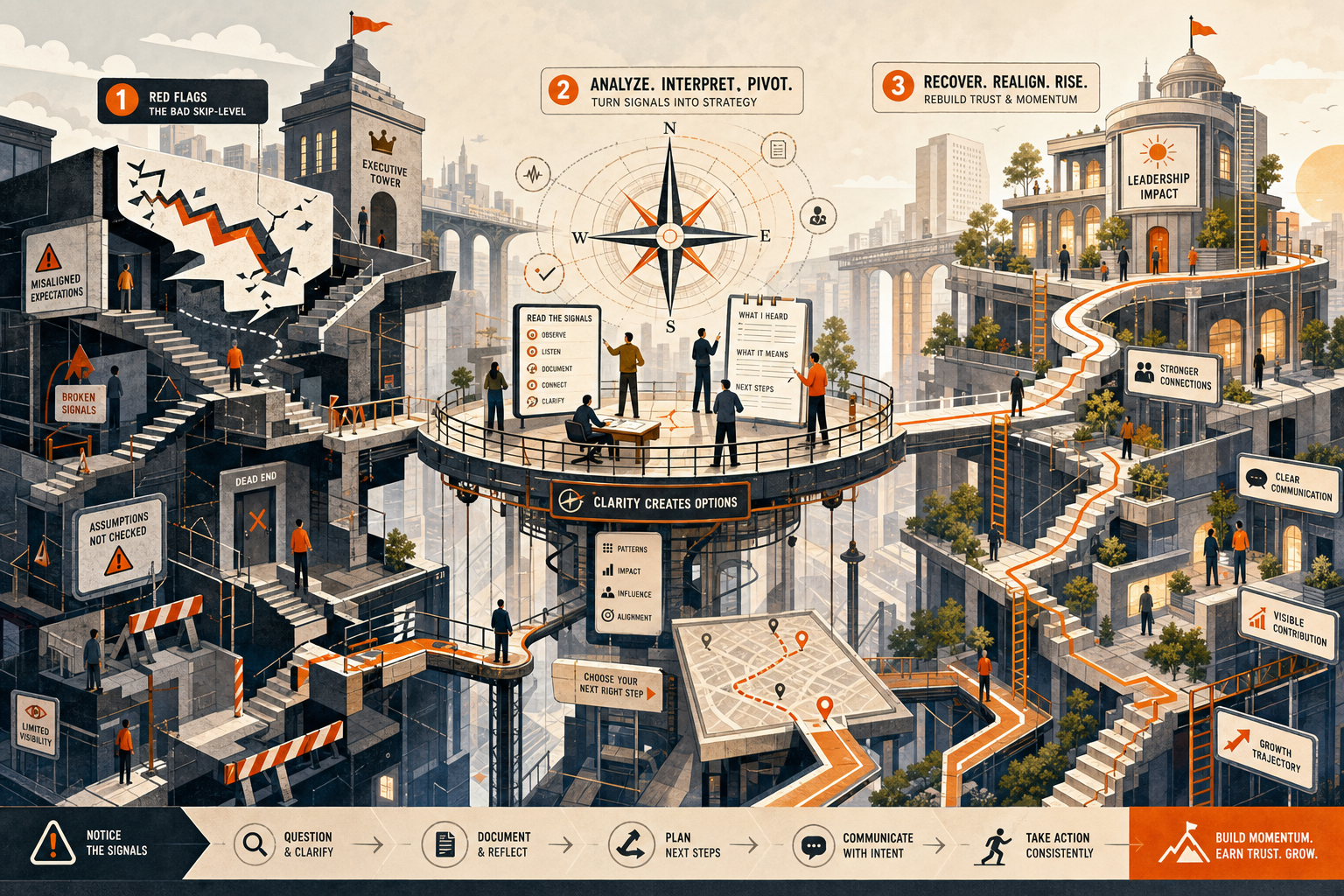
The right response is not a dramatic showdown and it is not saintly silence. It is a calmer, sharper sequence than that: identify what actually happened, correct the record before the story hardens, and if it becomes a pattern, treat it like an operating problem instead of an awkward social one.
Start by separating theft from sloppiness
Not every ugly feeling in a meeting means you are dealing with a cartoon villain.
Sometimes a coworker absolutely knows what they are doing. They present your recommendation as theirs. They omit your role with suspicious precision. They talk about work you drove as if you were a helpful extra carrying cables offstage. That happens.
But plenty of credit problems are born from the cheap, glitchy machinery of modern work. Ownership was fuzzy. Too many people touched the project. The manager skimmed half the thread. Somebody defaulted to “we” because it felt polite, and ten minutes later “we” quietly became “me.”
Those are different situations. If you confuse them, you will either underreact to a pattern or overreact to a mess.
Before you decide this is betrayal, make yourself answer three questions:
- Was my ownership obvious to other people, or only obvious to me?
- Did the person have a chance to correct it — and if so, did they?
- Does this feel irritating once, or familiar in a way that makes my shoulders tense before the next meeting?
That third question matters because your body usually notices the pattern before your official workplace language does. You start dreading status calls. You over-prepare screenshots. You rehearse “just to add…” in the shower. Sunday night gets heavier because Monday means another round of maybe becoming invisible in public.
If you are foggy, build a timeline before you build a theory. Open a note and write four things: what you did, when you did it, who saw it, and what happened in the meeting. Five clean bullets will do more for your judgment than fifty loops of offended mind-reading.
Don’t turn it into a courtroom drama
A lot of capable people get stuck here because they become obsessed with intent.
Was that deliberate? Is she threatened? Is he political? Did they know exactly what they were doing?
Maybe. But motive is a swamp. Once you walk into it, you either freeze because you cannot prove anything, or you explode because you have quietly built a whole villain arc in your head. Neither move gets your name back on your work.
You do not need a verdict on their soul. You need the people who matter to understand who did what.
That distinction changes your posture immediately. It pulls you out of “How dare they?” and into “What record needs correcting right now?” It also keeps you from sending one of those doomed messages that starts with “Just wanted to flag…” and ends six paragraphs later sounding like a medium-stakes legal filing.
Strip the emotion out for a minute and ask yourself: What, exactly, do I want this team to understand about my contribution? Write that sentence down first. Use that sentence, not your adrenaline, to decide what happens next.
Correct the record while it is still warm
The best intervention is often so unglamorous it feels unsatisfying.
Good. Unshowy is believable.
In the meeting, step in with specifics instead of wounded energy:
- “Yes — the customer analysis I ran is what pushed us toward option B.”
- “To add context, I drafted the first version of this workflow after last week’s support review.”
- “The recommendation came from the test I’ve been running, and the next step is validating it with finance.”
These lines work because they do one simple job: they reattach your work to your name without forcing the room into a weird HR theater production. You are not accusing. You are clarifying.
If the meeting has already ended, do not sit there composing imaginary speeches on your walk home. Send the follow-up while the moment still has blood in it.
A private message can be enough:
Hey — quick note on the update earlier. I think ownership got a little blurred in the discussion. Since I led the draft and analysis, I want to make sure that’s clearer next time.
Short. Factual. Adult. No emotional flourishes. No “I was disappointed.” No “help me understand.” No attaching seventeen screenshots like you are producing a true-crime podcast.
Then do the more powerful thing: create a written record the team can refer back to.
Recap from today: I’ll finalize the model changes we reviewed, Priya will confirm dependencies with Ops, and we’ll bring the revised recommendation on Thursday.
That tiny recap does a lot of hidden work. It names owners. It makes your role visible. It quietly tells the room that this project does, in fact, have authorship.
Pick one recent situation — even if it is mildly stale — and send the recap today. Better a late paper trail than none at all.
When it repeats, stop calling it awkward
One muddy update is annoying.
Three muddy updates involving the same person are not “confusing.” They are a pattern. And patterns change your reputation while you are still trying to decide whether you are allowed to be annoyed.
This is where people who desperately want to be seen as collaborative get into trouble. They keep treating each incident as isolated because they do not want to sound petty. They keep extending generosity long after generosity has become self-erasure. Meanwhile, their coworker keeps strolling away with authorship like they found it lying unattended on a conference table.
Repeated attribution problems do not just sting in the moment. They distort your future. Another team starts thinking your coworker is the strategic brain. Your manager hears their name attached to the work more often than yours. By review season, people are confidently repeating a version of events you would not even recognize.
So once you see repetition, stop relying on memory. Start documenting the boring stuff:
- the draft you sent
- the date you circulated version one
- the comments you resolved
- the Slack thread assigning the work
- the meeting notes showing your recommendation
- the follow-up where ownership was or was not corrected
And organize it in sequence. Sequence is what gives facts their spine.
“On Tuesday I shared the first draft. On Thursday we reviewed my analysis. On Monday the update presented those recommendations without attribution.”
That lands very differently from “I feel like I’m not getting enough credit.” One sounds professional. The other sounds easier for a lazy manager to wave away.
Your Move
For the next month, keep a running log with four columns: date, project, your contribution, public attribution. You are not being paranoid. You are refusing to let workplace amnesia become the official story.
Bring your manager in before the story hardens
Too many people wait until performance review season to mention this stuff, which is roughly the worst possible time.
By then the problem has already congealed. Your manager has half-formed impressions. Senior people have heard a simplified version of the work. The coworker who keeps narrating loudly has been auditioning for authorship in public for months while you were hoping merit would travel telepathically.
A decent manager cannot fix what they cannot see. And many genuinely do not see it unless you make it legible.
Do not march in saying, “Alex keeps stealing my work.” Even if true, that framing invites a personality debate. You want an operating fix, not a reality-TV episode.
Try this instead:
- “I’m noticing repeated confusion about ownership on shared projects, and I want help making my contributions more visible.”
- “There have been a couple of updates where my role in the analysis was unclear. I’d like to tighten how we communicate ownership.”
- “Can we align on how my scope should be surfaced in cross-functional meetings?”
That framing gives your manager something useful to do. They can name you in meetings. They can reset roles. They can redirect updates. They can coach you on where to show up more visibly. They can also reveal, very quickly, whether they are the kind of manager who protects signal or the kind who lets louder people write the narrative.
Sit with this question before your next 1:1: if your manager had to describe your last three meaningful contributions to their boss tomorrow, would they get them right? If the answer is no, bring that gap into the room.
And yes — there is a particular relief when a good manager actually gets it. The kind where you leave the 1:1 feeling six pounds lighter because someone finally said, “I see what’s happening, and I’m going to help fix it.” That relief matters. It tells you you’re not imagining things.
Shared work is where credit goes to get flattened
Cross-functional projects are especially dangerous because everyone has a semi-plausible claim to importance.
Product shaped the direction. Analytics found the pattern. Ops made it executable. Marketing translated it into something a human could understand. Leadership blessed it at the end and now vaguely remembers being “close to the work.” It is a crowded crime scene.
That is why vague language is so expensive.
When teams say “we decided,” “we aligned,” or “the team landed on,” they often think they are being gracious. Sometimes they are. Other times they are pouring wet cement over actual contribution.
If you are quieter, more junior, or simply less addicted to self-promotion, you lose in these environments unless you learn to describe work precisely without sounding like you are trying to win a Grammy.
Use cleaner language:
- “I drafted the recommendation, then we pressure-tested it together.”
- “Miguel made the final call after I pulled the analysis.”
- “Tara handled rollout; I led the process redesign.”
- “I built the initial model, and the team refined it in review.”
That kind of sentence is not petty. It is adult. It gives other people their credit without vaporizing your own.
The move this week is to replace one fuzzy “we” in your next meeting with a sentence that names actual contributions. Do it once and notice how much clearer the room becomes.
Build visibility before you need to defend it
The strongest protection against credit theft is rarely confrontation. It is infrastructure.
People with durable reputations usually leave fingerprints everywhere, whether on purpose or by instinct. Their work shows up in shared docs. Their updates are visible. Their manager is not surprised by what they drove. Stakeholders know what they own because they have seen their name attached to real movement more than once.
That can look like:
- a short recap after collaborative meetings
- project docs with named owners
- agendas that show who is leading which section
- updates in shared channels before the final presentation
- weekly 1:1 notes that capture what you drove, not just what you attended
This is not “personal branding” in the awful, over-moist LinkedIn sense of the phrase. It is operational hygiene. It saves future-you from the bleak experience of hearing someone else describe your work more confidently than you have documented it yourself.
There is also an emotional hurdle here that people do not say out loud. Making your work visible can feel embarrassingly self-conscious, especially if you were trained to be the competent one, the low-maintenance one, the person who quietly fixes everything while someone else does the jazz hands. You worry you will look self-important.
Meanwhile, the bolder coworker with half your substance is narrating every spreadsheet like they landed a spacecraft.
That mismatch is not fair, but it is common. Which means your job is not to resent the existence of visibility. Your job is to get better at creating it without becoming insufferable.
Try This
For the next three weeks, send your manager a Friday note with three bullets: - what you drove - what changed because of it - what happens next
Not a novel. Not a performance. Just enough signal that your contribution stops evaporating between meetings.
What you are protecting is not your ego
People love to downplay this issue by acting as though wanting accurate attribution is some delicate vanity project.
It isn’t.
Yes, it hurts on a human level. Being erased creates a strange mix of anger and shame. You can feel ridiculous for caring and furious that you have to. It can ruin an otherwise normal evening. It can make your Sunday night feel heavier because you know the week ahead includes more rooms where you may need to fight just to remain visible in a story you helped write.
But the bigger problem is strategic.
Careers compound around perceived strengths. If people repeatedly associate you with execution but never authorship, support but never initiative, reliability but never insight, that becomes the lane you get offered. You do not merely lose credit for one meeting. You lose access to stretch work, sponsorship, leadership opportunities, and eventually money.
So ask yourself something plain and slightly uncomfortable: What story is my workplace currently telling about where my value comes from? Is it a story you would choose? Or is it a story assembled from whatever other people happened to notice — or claim — while you stayed politely quiet?
If the answer bothers you, that is useful. It means you still have time to rewrite the narrative before it calcifies.
Make your progress legible on purpose
One reason these situations feel so destabilizing is that many people do not have a reliable system for tracking their own contribution. They are running their careers on memory, vibes, and the hope that a busy manager noticed the right thing at the right time. That is flimsy. It leaves too much room for louder people to become the official historians of your work.
A better approach is to treat visibility as part of your operating system. Track what you shipped. Track what moved because of it. Track where your contribution keeps getting blurred and where it is recognized cleanly. Notice which managers amplify your work and which ones let it sink into the carpet. Notice how your body reacts too — the dread before a certain meeting, the relief after a clarifying conversation, the way resentment builds when you keep doing high-value work under someone else’s name.
That is where a tool like Career Compass fits naturally, not as some shiny add-on but as structure. If your work has a habit of disappearing into group projects, you need more than outrage and better phrasing. You need a system that helps you record wins, spot patterns, and make your growth visible before review season turns everything into folklore.
And that is the mindset shift I would leave you with: the goal is not to become louder for the sake of ego. The goal is to become clearer for the sake of your future. Accurate attribution is not vanity. It is how opportunities find the right person. If a coworker takes credit once, correct it. If it happens again, document it. If the pattern continues, redesign the system around your work so it is much harder to erase. Career Compass can help with that, but the real change starts earlier — the moment you stop treating visibility as optional and start treating it as part of doing the job well.
You are not difficult for wanting the record to be true. You are not dramatic for refusing to disappear inside “we.” In modern work, especially messy collaborative work, clarity is not extra polish. It is protection. And once you understand that, you stop waiting for fairness to happen accidentally and start building a career that is much harder for anyone else to narrate for you.