Stop Starting Work You Don’t Understand

Stop Rewarding Yourself for Starting Work You Don’t Understand
One of the fastest ways to look diligent while quietly tanking your credibility is to start sprinting on a request that nobody has actually defined.
Early in your career, this gets mistaken for initiative. You reply in thirty seconds. You seem game. You do not make anyone slow down and explain themselves. You are “all over it.” Then the draft comes back filleted with comments, or your manager says “thanks” and secretly rebuilds the thing at 11 p.m. on Sunday.
That feeling is awful in a very specific way. Not cinematic. Not dramatic. Just that private, stomach-dropping shame of realizing you worked hard, stayed late, tried to be useful, and still somehow produced the wrong thing. You sit there blinking at your screen thinking, How am I exhausted and also missing the point?
Because effort was never the problem.
A lot of smart people use motion to medicate uncertainty. A vague ask lands, your nervous system lights up, and you start doing things so you do not have to feel the ambiguity. Open the spreadsheet. Build the deck. Draft the memo. Starting feels productive because your hands are busy and your anxiety has somewhere to go. Then, two days later, you find out the audience was different, the decision was different, the deadline was fake, or the real task was hiding underneath the task-shaped noise.
That is not a hustle issue. It is not a motivation issue. It is not something a prettier task manager will solve.
It is a clarity problem. And clarity problems do not improve because you started typing faster.
TL;DR
- If you cannot explain what “good” looks like, the work has not really started yet.
- The urge to begin instantly usually comes from fear: of looking slow, junior, annoying, or not naturally sharp.
- A vague request gets expensive when the outcome, audience, owner, deadline, or tradeoffs are still floating around unclaimed.
- “On it” is often the weakest possible response. “Here’s how I understand the ask” shows actual judgment.
- People who clarify early are usually trusted more than people who disappear for six hours and return with beautifully formatted confusion.
The real cost of unclear work
Unclear work is dangerous because it flatters you in the beginning.
For the first hour, it feels like momentum. You got the request. You moved fast. You are being responsive. You can almost hear the imaginary performance review line writing itself: proactive, strong executor, low ego, jumps in where needed.
Then comes the bill.
It usually arrives as a nasty little emotional cocktail: irritation because the target moved, embarrassment because everybody else apparently knew this was for leadership and you did not, resentment because no one made the actual decisions up front and you made them accidentally, plus that sour Sunday-night dread that comes from knowing Monday will begin with rework. This is how conscientious people get tired in a way that feels moral. They think they are tired because they care a lot. Often they are tired because they are carrying ambiguity that should have been shared.
If this pattern keeps showing up, stop calling it a productivity problem. It is a boundary problem. You are absorbing unmade decisions into your own brain and then blaming yourself for the weight. The next time you feel urgency before you feel clarity, treat that as a flare. Pause there. That is the moment to ask what game you are actually playing.
When a task is still a blob
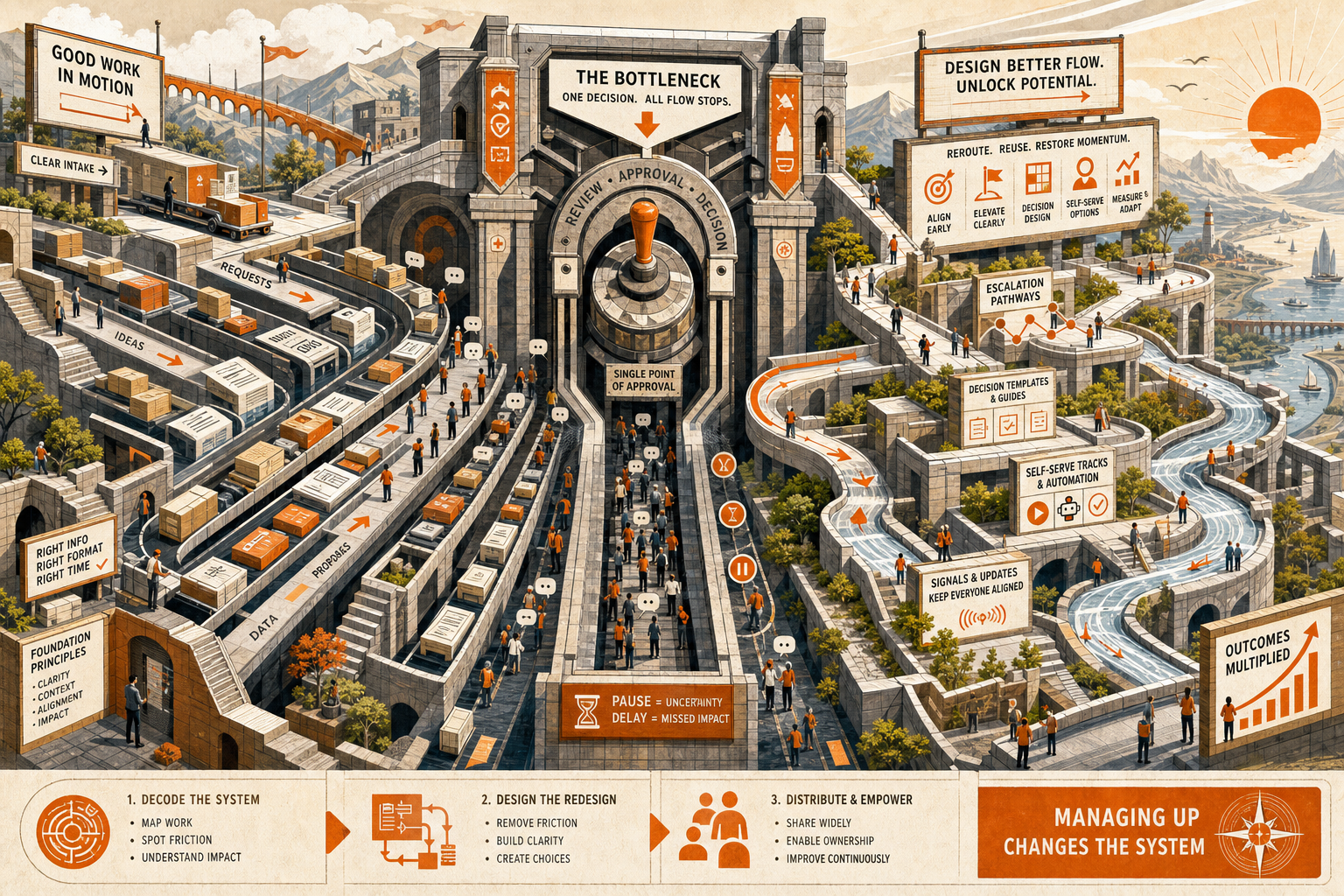
Most vague asks are not tasks. They are intentions wearing office clothes.
A real task has edges. A blob does not.
A real task tells you what outcome matters, who it is for, when it is needed, who gets the final say, and what matters most if tradeoffs show up. A blob sounds like this:
- “Can you pull something together?”
- “Take a look and let me know what you think.”
- “We need something on churn.”
- “Can you draft a few ideas?”
- “Maybe put this into slides?”
None of these are evil. They are just unfinished. The trouble starts when you pretend they are finished because you want to be pleasant.
This is where early-career people get trapped. You want to seem capable without seeming high-maintenance. You do not want to become the person who turns a quick request into a full intake interview. You definitely do not want that look from a manager — the tiny exhale, the tight smile — that says, why is this suddenly a whole thing?
So you say yes with confidence you do not actually feel.
Then you spend four hours decorating a guess.
Ask yourself a ruder, better question: am I solving a problem, or am I making uncertainty look polished? Sit with that for a second. Then pick one fuzzy request on your plate and write down the outcome in one sentence. If you cannot, do not start the work yet.
Five signs you should not begin
You do not need a fancy framework here. Usually the warning lights are blinking directly in your face. You have just been trained to ignore them.
1. You know the format, but not the point
“Put together some slides” is not direction. It is software selection.
Slides for what? To brief? To persuade? To force a decision? To calm down one executive who wants three bullets before walking into another meeting? Format without purpose is how entire companies produce sleek nonsense at industrial scale.
Say this instead: “What should the audience know, decide, or do by the end?”
Then wait. Do not rescue the silence.
2. Nobody owns the final call
If three stakeholders can all later say, “Hmm, this isn’t what I expected,” congratulations: you are not in a project. You are in a swamp.
A lot of workplace misery comes from unresolved authority pretending to be collaboration. The correction can be short and calm: “If feedback conflicts, who should I optimize for?” It feels sharp the first time you say it. It also saves you from the fourth revision no one will thank you for.
Pick the murkiest active project you have and identify, in writing, who has final say. If you cannot name that person, the risk is already in the room.
3. The priority only feels urgent because someone senior said it
Conscientious people ruin their own weeks like this all the time. A fuzzy ask arrives from somebody important, so your nervous system upgrades it to DEFCON 1. Meanwhile, your existing deadlines remain alive. Now you are overbooked, underinformed, and quietly furious by Thursday afternoon.
This is where people start saying things like “I just need to manage my time better,” when what they really need is one honest tradeoff conversation.
Try the sentence that saves Wednesdays: “Where does this sit relative to the other two things due this week?” If you do not ask, you are volunteering for invisible overtime and then calling it professionalism.
4. There is no definition of done
Without a finish line, the work swells. You keep adding context, polishing language, checking one more source, tweaking one more chart. Ambiguity is catnip for perfectionism. It gives your anxious brain unlimited room to keep proving itself.
A much better question is almost boring: “What would make this good enough for this round?”
Not immortal. Not bulletproof. Good enough for this round.
That phrase matters because rounds matter. Most work is not a final performance. It is a draft in public.
5. The ask exists only in somebody’s memory
This is how office folklore begins.
A comment in a meeting. A Slack message buried under GIFs and incident alerts. A hallway conversation that each person remembers differently by the next morning. Then, somehow, you are the historian of a conversation that never became real.
Try This: after the next fuzzy conversation, send a three-sentence recap within ten minutes. Include the outcome, the audience, and the timing. If relevant, add what you are not covering. That tiny note is not bureaucracy. It is a small act of self-defense.
The stronger professional signal is interpretation, not speed
A lot of people still believe the best employees are the ones who leap before anyone finishes the sentence.
That is only true when the task is already clear.
When the ask is mushy, the stronger move is to show your read before you start. Not a flood of questions. Not an annoying form. Just a concise interpretation that makes the hidden assumptions visible enough for another adult to confirm or correct.
For example:
“My understanding is that you want a one-page summary for Friday’s leadership meeting, focused on the main churn drivers and two possible responses — not a full analysis. If that’s right, I’ll optimize for speed and decision-usefulness over completeness.”
That is a grown-up response.
It defines the output. It names the audience. It states the deadline. It reveals the tradeoff. It also gives the other person a clean chance to say, “No, actually, this is for the board,” before you spend your afternoon building the wrong cathedral.
This is what judgment looks like at work much more often than people admit. Not charisma. Not “executive presence.” Not mysterious strategic instincts bestowed by the gods of middle management. Just the ability to hear a foggy request and turn it into a sentence someone else can approve.
So send the sentence. Even if it makes you feel exposed. Especially then.
Stop clarifying in private
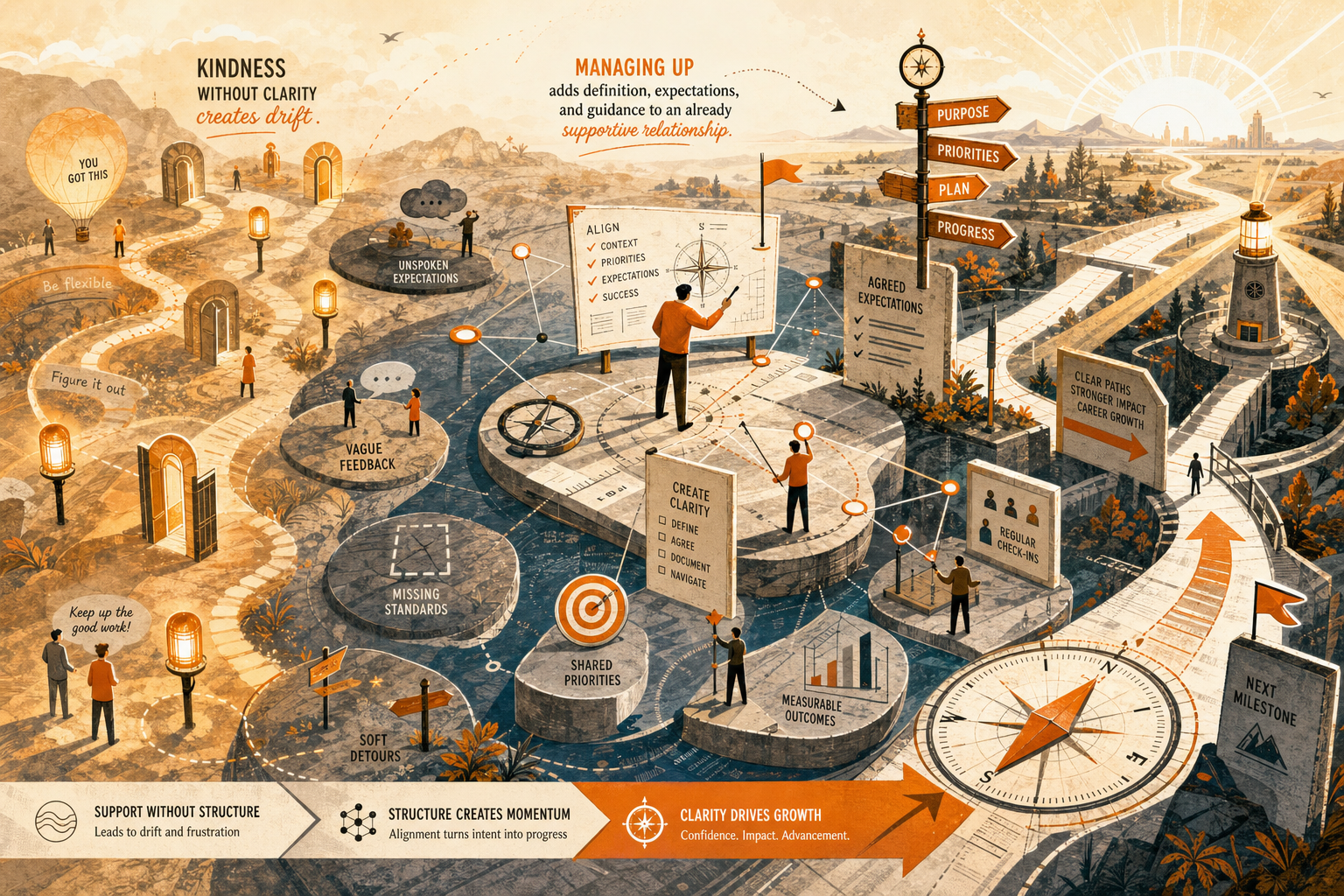
This is the trap smart, polite people fall into: they do clarify, but only silently.
They hear the vague request, build a reasonable interpretation in their own head, and proceed as if everyone else signed it. Nobody did. You are not aligned. You are just guessing with excellent manners.
The fix is simple and weirdly uncomfortable: move your interpretation into public view.
In a meeting, that might be: “Let me play back what I’m hearing so we leave with the same target.”
In Slack: “Here’s my read of the ask before I start.”
In email: “I’m planning to cover X and leave out Y unless you want the broader version.”
That last part matters. Scope is not real until something is excluded.
Here are some replacements for the autopilot phrases that make work worse:
| Instead of this | Say this |
|---|---|
| “On it.” | “Here’s my read: X for Y audience by Friday.” |
| “Sure, no problem.” | “Happy to take it — which matters more here, speed or depth?” |
| “I’ll send something later.” | “I’ll send a first pass aimed at decision-making, not full detail, unless you want completeness.” |
Notice what these do: they force tradeoffs into daylight.
That is the whole game. Most workplace confusion survives because everyone is politely pretending you can maximize speed, polish, rigor, certainty, and breadth at the same time. You cannot. Somebody has to say so. It might as well be you.
Before your next 1:1, write down one place where you have been carrying private assumptions. Then say them out loud.
A concrete example: six wasted hours and one better sentence
A manager says, “Can you look into churn and pull something together for leadership?”
Weak response: open the dashboard, export six charts, start building a ten-slide deck, lose half your afternoon, and pray the answer reveals itself if you stare at enough data. This feels diligent right up until someone says, “Oh, this was really just for Thursday’s discussion.”
Better response:
“Got it. My read is that leadership needs the main churn drivers for Thursday’s conversation, plus two or three actions they may need to choose between. I’m going to keep this directional and decision-focused rather than do a full forensic analysis. If that’s off, tell me now.”
That sentence does the hard part while the work is still cheap. It names the audience, purpose, timeline, and level of rigor. It turns a blob into a target.
More importantly, it changes your emotional experience of the work. In the first version, you are operating in a low-grade fog, burning energy on invisible assumptions and hoping no one notices. In the second, you get the electric relief of a confirmed lane. That relief is not trivial. It is one of the best feelings in working life: the moment ambiguity collapses and the room agrees on what “good” means.
The move here is painfully practical. The next time a vague request lands, do not touch the work for five minutes. First write a one-sentence interpretation. Then send it.
Why managers trust this faster than raw effort
People say they value hard work. At work, what they usually value is relief.
Can they hand you a messy problem and trust that you will make it clearer, not noisier? Can you reduce follow-up meetings? Can you stop a request from mutating into a scavenger hunt? Can you protect the team from that awful moment where a stakeholder says, “This isn’t what I thought we were doing,” and suddenly everyone is reconstructing a conversation like detectives at a very boring crime scene?
That is why clarification builds trust so fast. It does not just improve the output. It lowers friction for everybody around you.
When you surface the real question, people experience you as calming. When you document the scope, they experience you as safe. When you name the tradeoff, they experience you as someone who understands that work is not just producing artifacts — it is managing uncertainty before it gets expensive.
That matters more than being the fastest hands in the room.
Conventional advice tells junior employees to “take initiative.” Fine. But initiative without definition is how people build elegant answers to the wrong question. A better version of initiative is this: make the fuzzy parts visible while they are still cheap to fix.
Choose one recurring type of request you get — analysis, slides, research, status updates, meeting prep — and draft your default clarification sentence today. Save it somewhere easy to copy. Future you will be delighted.
Why this feels harder than it should
For a lot of people, this is not fundamentally a communication issue. It is a fear issue wearing business casual.
Clarifying can feel socially risky because it pokes at old anxieties all at once. You might look slower. You might look less intuitive. You might irritate someone who wanted instant obedience more than thoughtful framing. If you built your identity around being easy, useful, adaptable, low-drama, low-maintenance — this can hit a nerve fast.
That is why a normal workplace moment can feel weirdly loaded.
A manager says, “Can you just take a first pass?” and suddenly your body reacts like the stakes are moral. If I ask questions, will I seem difficult? If I don’t ask questions, can I earn approval by figuring it out alone? If I need clarity, does that mean I’m not sharp enough?
Sometimes that strategy works. For a while.
Then your work gets bigger, messier, more political, more cross-functional. At that level, guessing stops looking scrappy and starts looking expensive. Your old coping mechanism — absorb the confusion, smile, and make it work — becomes the thing slowing your growth.
Here is the question worth sitting with: where are you still trying to earn trust by carrying confusion silently?
That answer will tell you a lot about your stress.
Make the work durable
If the request matters, give it a form outside the conversation.
A short written recap is often enough:
- what you are producing
- who it is for
- when it is needed
- what you are optimizing for
- what you are deliberately leaving out
This does more than document the task. It turns the work into a shared object. Other people can react to it, correct it, refine it, approve it. Once that happens, the ambiguity is no longer living entirely in your nervous system like a feral houseguest.
This is one of the simplest ways to reduce career stress. Not all stress. Some managers will still be chaotic. Some teams will still run on vibes and caffeine. But there is a specific kind of dread that comes from carrying too many unspoken assumptions alone. A written recap returns some of that weight to the group, where it belongs.
After your next live conversation about a task, send the recap within ten minutes. Not later, when the day has gotten noisy. Ten minutes. While everyone still remembers what they actually meant.
A simple script for the next vague ask
Use this if you need training wheels:
“Just to confirm my understanding: you want [output] for [audience] by [deadline], and the priority is [speed/depth/polish/accuracy]. I’m planning to leave out [out-of-scope item] unless you want a broader version.”
No, you do not have to say it like a robot. Make it sound like a person who lives in your mouth. Strip it down. Add warmth. Change the order.
The point is not the script.
The point is the habit: translate fog into something another human can confirm.
Good careers are built on fewer private guesses
The older I get, the less impressed I am by frantic starts. Anybody can perform urgency. Plenty of people can look busy. A surprising number can martyr themselves to confusion and call it work ethic.
I am impressed by people who can slow the moment down just enough to define the target. They save time, yes. But they also save morale. They produce fewer pointless revisions, fewer brittle misunderstandings, fewer Sunday evenings poisoned by the feeling that Monday will be spent fixing avoidable nonsense. Over time, that changes more than output. It changes your relationship to work. You stop seeing your value as how much ambiguity you can absorb without complaint, and start seeing it as how clearly you can help a group think.
That is a real career shift. It is the move from being rewarded for compliance to being trusted for judgment. And once you feel that difference, it is hard to go back. The win is not just better deliverables. It is less dread, more clean relief, and a workweek that does not constantly punish you for trying to be helpful.
That is also why Career Compass matters here. Growth patterns like this are hard to change when they stay invisible. If you are always sprinting into fuzzy work, always overfunctioning, always ending the week with that stale mix of resentment and self-doubt, the fix is not another generic tip about communication. You need a way to notice the pattern, track it, and practice a better one on purpose. Career Compass helps you do that — by turning vague “I should be better at this” ambitions into something concrete you can actually measure and improve.
So the next time a half-baked request lands in your lap, do not give yourself credit for instant motion. Delay the little dopamine hit of “I started.” Earn your gold star later. First define the target, in public, while the work is still cheap. A good first move is rarely “I’m on it.” Much more often, it is: “Here’s what I think you need.”