Your Manager Changed. Assume the Job Changed Too

Your Manager Changed. Assume the Job Changed Too.
A manager change gets announced like a calendar update.
It is not a calendar update.
It is a rewrite of the hidden rules: how judgment works, who gets the benefit of the doubt, what “good” suddenly means, and how expensive a mistake becomes. The org chart can look identical on Monday. By Thursday, you can feel like you are interviewing for your own job.
That gap is where people get blindsided.
They keep performing the old version of the role because the title did not change, the meetings did not change, and nobody stood up to say, “Just so you know, the definition of competence has been quietly replaced.” Then the weird little symptoms start. Slack gets colder. Approvals take longer. A 1:1 that used to feel easy now feels like wearing someone else’s shoes. You leave thinking, Was that neutral? Was that bad? Why am I replaying one sentence from twenty minutes ago? Sunday night starts humming again. Work you used to ship confidently suddenly gets revised three times. You become acutely aware that your reputation now lives in rooms where you are not.
Most people respond by trying harder.
That is usually the wrong first move.
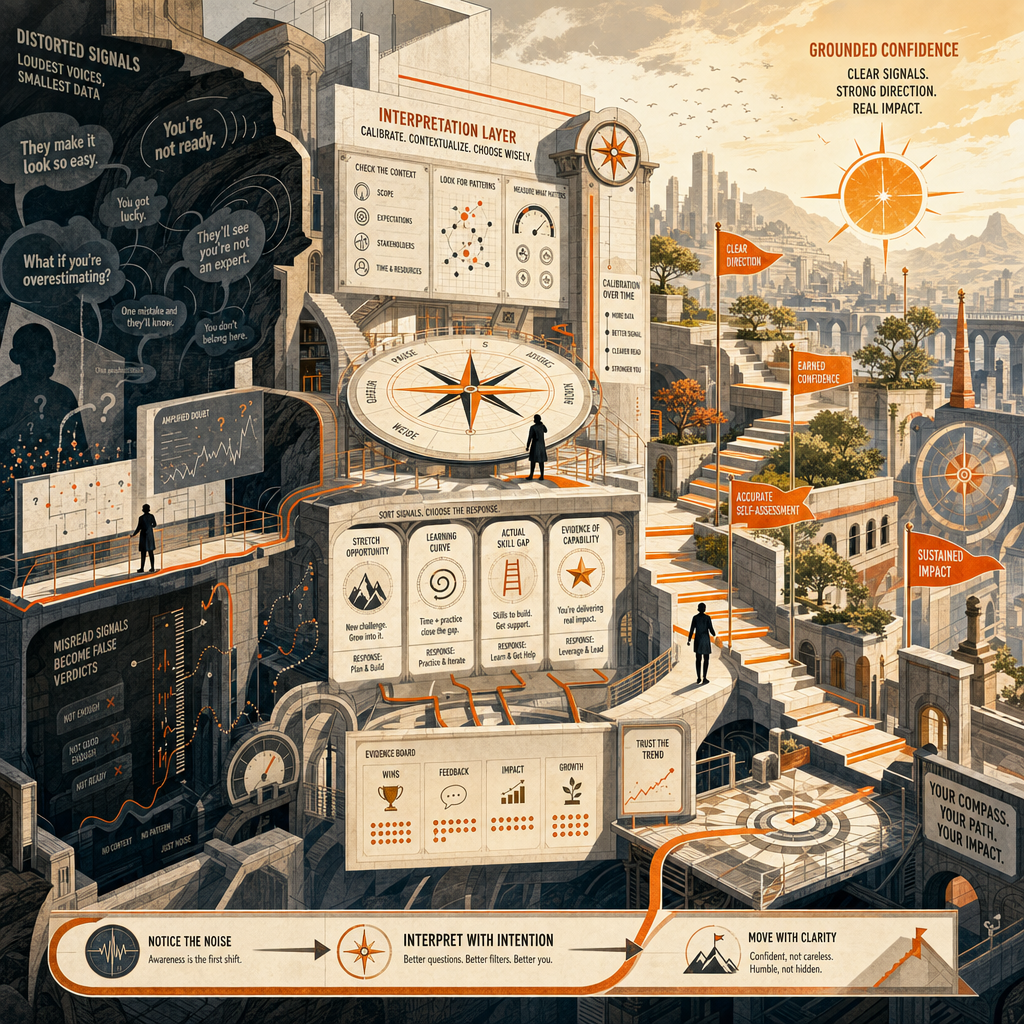
When your manager changes, the intelligent move is to rebuild the operating manual before confusion hardens into a reputation.
The short version
- A new manager often means a new job, even if HR never says so.
- Trust does not transfer cleanly; your history matters less than you want it to.
- “Work harder” is kid advice. “Make your judgment easier to evaluate” is adult advice.
- The biggest danger is rarely open conflict. It is quiet expectation drift.
- A manager transition can improve your position if you use it to clarify standards, reset bad patterns, and make your work painfully easy to understand.
Stop calling it a personality change
People love to reduce manager transitions to chemistry.
Different style. Different preferences. Just adapt.
That advice is so thin it is almost decorative.
A manager is not just a person with quirks about Slack punctuation and meeting agendas. A manager is a filter. They decide what gets noticed, what gets defended, what gets escalated, what gets forgiven, and what gets interpreted as competence versus drama versus risk. Change the filter and the exact same work can start reading differently.
I learned this the expensive way. In one role, a big part of why I joined was to work for a VP I thought would be a real mentor. Three months later, he was gone. I was suddenly reporting to the CEO while carrying a broader, messier scope than the one I had signed up for. Same company. Same laptop. Entirely different weather system.
That experience permanently cured me of the idea that manager changes are neutral.
If you are early in your career, this can scramble you more than you expect. You are often still building your own sense of what “good” looks like. A strong manager can make you sharper and steadier. A bad fit can make you feel weirdly incompetent in a role you were handling just fine a month ago. That is not you becoming fragile. That is your nervous system responding to ambiguity, status risk, and the possibility that the floor moved while nobody warned you.
Here is the question worth sitting with this week: if you ignored titles and looked only at how your work is judged now, would you honestly call this the same job?
Your old manager’s trust left with your old manager
Not your skills.
Not your intelligence.
Not the actual work you have done.
But the lived-in trust that made your work move faster? Yes. A lot of that often walks out the door with them.
Your previous manager may have known that when you sounded cautious, there was probably a real issue. They may have understood that your first drafts look rough because you think by exposing the structure early, then tighten fast. They may have known that if you missed a detail on Monday, you would catch it yourself by Tuesday before it became expensive.
Your new manager knows none of that yet.
They know fragments. Meeting impressions. What other people casually say. Whether your projects look orderly or chaotic from far away. And because they are a human being in an organization, they will start forming judgments before they have enough information to deserve those judgments.
That feels unfair because it is unfair.
It is also normal.
A lot of people get stuck right here, privately furious that they have to re-prove things they already proved. You can feel the resentment in your own body: shorter answers, tighter jaw, that little internal speech of They should know this by now. The problem is that resentment tends to leak out as stiffness, defensiveness, or that classic corporate label, “a bit hard to manage,” when what is actually happening is simpler: you are frustrated that your prior credibility is no longer liquid.
Translate the thought. Instead of They should already know this, use the more useful sentence: They need cleaner evidence.
So give them cleaner evidence.
Not a speech about your value. Not a moody reference to your track record. Evidence. Send sharper updates. Put tradeoffs in writing. Make your decisions visible. If you need your manager to trust your judgment, stop asking them to infer it from effort and vibes. Pick one current project and rewrite your next update so the decision, the reasoning, and the risk are obvious at a glance.
In the first two weeks, map the new operating manual
The opening stretch is not the time to seem dazzling. It is the time to get precise.
You are not just learning a person’s preferences. You are learning how judgment and power flow through them. That means you need to map four things quickly.
First: priorities. Not the priorities on the slide deck everyone pretends is alive. The real priorities. What makes this manager sit up? What do they ask twice? What do they remember a week later?
Second: update cadence. Some managers want an ugly early warning when things are still half-baked. Others want a clean weekly synthesis with no drama attached. Others say “don’t bother me unless you’re blocked,” then act betrayed when they hear bad news late. Find out which flavor of contradiction you are dealing with.
Third: decision boundaries. What can you decide alone? What needs a check-in? What counts as “keeping them informed” versus “asking permission”? Guess wrong here and you can look timid or reckless with the exact same action.
Fourth: evidence. What convinces this person that someone is excellent? Tight written thinking? Fast shipping? Calm under heat? Political smoothness? Low chaos? Visible momentum? There is always a pattern, even when they cannot articulate it cleanly.
This is where plenty of smart people get trapped. They are doing good work in a format their new manager barely perceives. It is like delivering your best lines through a microphone that is not plugged in. You are performing. Nothing is landing.
You do not need a sophisticated script here. You need a direct one:
“I want to make it easy for you to assess my work accurately. As you get settled, what do you want to hear early? What makes an update useful to you? And when someone on your team is doing excellent work, what are you usually seeing?”
That question does not make you look insecure. It makes you look serious.
Ask some version of it in your next 1:1, then write down the answer immediately after. Do not trust your memory. Memory is a terrible note-taker when your career feels even slightly threatened.
Make your work embarrassingly easy to understand
A new manager inherits a pile.
A pile of people, half-finished projects, political landmines, old promises, and that one weird cross-functional issue nobody can explain without using the phrase “historically.” In a pile, people use shortcuts. Those shortcuts become judgments. Judgments become reputation.
Your job is to reduce the need for shortcuts.
So when you update a new manager, structure matters more than charm. A useful update usually answers five things:
- What is the goal?
- Where does it stand?
- What is the biggest risk?
- What dependency or blocker matters?
- What decision is needed next?
That format is not elegant. It is useful. Useful beats elegant every time when someone is overloaded and trying to decide whether you make their life easier or harder.
Compare these two updates.
Weak: “We’re making progress on onboarding and still syncing with product and design on a few open questions.”
Useful: “Goal is to launch the new onboarding flow by the 28th. Build is about 80% complete. Main risk is legal review on the consent screen, which could delay launch by four days. I need product to decide by Wednesday whether we launch the shorter version or hold for the full flow.”
One version creates fog. The other creates traction.
A lot of people resist this because explicitness feels exposing. Naming a risk can feel like confessing weakness. Asking for a decision can feel needy. But unclear updates are what actually make managers nervous. Vagueness is expensive. Calm specificity lowers everybody’s blood pressure.
The move this week is simple: take one muddy status update sitting in your drafts, messages, or notes and rewrite it so a tired executive could understand it in fifteen seconds.
Watch for quiet drift, not dramatic conflict
The dangerous transitions are rarely explosive.
Usually they are deniable.
You stop getting the quick replies you used to get. Work that once earned “looks good” comes back with edits that feel oddly philosophical. You are praised as “super helpful,” but somehow not invited into the conversations where direction gets set. Priorities change in side channels. Meetings leave a residue of confusion instead of clarity. Nothing is catastrophic enough to point at. Everything is off enough to sit in your chest all evening.
That feeling matters.
Often what is shifting is not style. It is success criteria.
Style drift sounds like this: My old manager liked context, this one wants bullets. Annoying, but manageable.
Success-criteria drift sounds like this: My old manager rewarded thoughtful depth, this one rewards visible momentum even when the work is rougher. That is not a preference issue. That is a different game with different scoring.
Miss that distinction and you can waste months solving the wrong problem with heroic discipline.
This is why “just give it time” is weak advice when the pattern is already visible. Time does not reveal standards nearly as often as it hardens them. The longer your manager quietly concludes you are not aligned, the harder it gets to reverse.
So say the thing while it is still small enough to fix:
“I want to check my calibration. I’m noticing more emphasis on X than Y, and I want to make sure I’m optimizing for the right outcome. Is that the shift?”
That sentence turns haze into signal. You are not complaining. You are testing the map.
Pick one pattern that has been nagging at you but still feels “too minor” to raise. Raise that exact pattern in your next 1:1 instead of waiting until it becomes a story about your entire role.
Your new manager may be anxious, overloaded, or politically exposed
This does not excuse bad management.
It does explain some behavior people personalize too fast.
A new manager may be inheriting a team they did not choose, a roadmap they do not trust, commitments they would never have made, and pressure from above they cannot narrate honestly downward. They may be trying to figure out who is solid, where the hidden fires are, and which smiling “green” project is actually a corpse in a blazer. In that state, even decent managers can become vague, inconsistent, weirdly controlling, or emotionally flat.
If you have never managed people, it is easy to imagine managers spend their days making thoughtful, coherent decisions. Many are improvising in decent shoes while trying not to look panicked.
This matters because it changes your interpretation. Instead of spiraling into I’m losing credibility, you can ask a much more useful question: What uncertainty can I remove from this system?
That question gives you leverage.
Be the person who flags a risk before it gets expensive. Be the person who summarizes a tradeoff nobody else has named clearly. Be the person whose update reduces chaos instead of adding to it. These are not glamorous talents. They are career accelerants because they travel well across leaders, reorganizations, and ugly quarters.
Here is a direct imperative: send one update this week designed not to impress, but to reduce your manager’s uncertainty. Different goal. Better result.
Use the transition to reset bad patterns
There is an upside to manager changes that people miss because they are busy bracing for impact.
You get to reintroduce yourself.
If your old setup was muddy, this is your chance to stop living inside the same stale reputation. Maybe your work was stronger than your visibility. Maybe you had become the reliable fixer of random nonsense, which feels noble right up until someone else gets described as “strategic.” Maybe you had weak boundaries, chaotic updates, or a habit of rescuing projects at the eleventh hour instead of preventing the mess in the first place.
A new manager does not automatically inherit all those grooves.
Good. Use that.
Start presenting your work around outcomes instead of effort. Stop volunteering for every stray task that lands near your desk just because you can handle it. Show the architecture of your thinking. Let people see the judgment, not just the hustle. This is not branding theater. It is grown-up framing.
For early-career professionals especially, this point is brutal and important. A lot of people get rewarded for being endlessly helpful, then act shocked when they become organizational duct tape: useful everywhere, advancing nowhere.
Your Move: Draw a line down a page. On one side, list the work that demonstrates judgment. On the other, list the work that mainly demonstrates willingness. Then look honestly at where your week goes. If the second column is swallowing the first, your manager change is an opportunity to rebalance before that pattern calcifies.
Know when the problem is no longer “communication”
Sometimes a manager transition reveals something uglier than misalignment.
It reveals that the system itself is unstable.
If you ask for clarity repeatedly and keep getting moving targets, pay attention. If decisions route around you, pay attention. If your scope quietly shrinks while feedback stays weirdly positive, definitely pay attention. If your manager compliments your attitude but never increases trust in your judgment, that is not a cute little communication issue. That is information.
There is a real difference between adapting to a healthy system and contorting yourself to survive an incoherent one.
In a healthy system, the standards may be different, but once you understand them, you can work with them.
In an unhealthy system, standards change after the fact, politics override stated priorities, and good performance remains impossible to demonstrate no matter how carefully you calibrate. People stay trapped here because they keep treating a structural problem like a self-improvement hobby. If I communicate better. If I get more patient. If I become more cheerful. If I write longer updates. If I write shorter updates. Sometimes that helps. Sometimes you are just redecorating a bad room.
Ask yourself the harder question: if you performed brilliantly for the next ninety days, would this manager be able to recognize it?
If the honest answer is no, you are not dealing with a normal adjustment period. You are looking at role risk.
Write a private one-page record this week: current scope, recent wins, open risks, places standards shifted, examples of decisions moving around you. Not because you are building a legal case. Because future-you will need a clean record when present-you is tired, hopeful, or confused.
Build your own source of truth
This is where people get into trouble: they rely on memory during a period when memory becomes highly unreliable.
One bad 1:1 can stain an entire month. One reassuring comment can make you ignore a pattern that has been obvious for weeks. Stress is a terrible analyst. Hope is not much better.
When your manager changes, self-documentation stops being a nice professional habit and becomes career protection.
You need somewhere to track what is actually happening: weekly wins, changing priorities, manager signals, stress patterns, relationship health, where your scope is growing, where it is quietly shrinking, and what you were told versus what later changed. That record helps you do three things at once: adapt faster, advocate for yourself more clearly, and recognize genuine role risk before it starts eating your confidence for breakfast.
That is why Career Compass exists.
Not to give you generic advice about “being proactive.” You already know that sentence. It has never once saved anyone. Career Compass is useful because it helps you see the pattern while you are still inside it: the drift in expectations, the repeated friction, the decisions that keep moving, the good signals you are too anxious to trust, and the bad signals you are too tired to name. It gives you a place to build a growth plan, track the career metrics that actually matter, and get nudges that are grounded in your real work life instead of motivational wallpaper.
If your manager changed this month, do not spend the next four weeks trying to win them over with extra effort and crossed fingers. Rebuild the manual. Clarify the standard. Make your work easier to trust. Keep a written record sharp enough to cut through your own stress.
And if the system stays slippery, believe what you are seeing sooner.
That is the mindset shift.
A manager change is not a test of whether you can be agreeable enough, patient enough, or hardworking enough to survive ambiguity. It is a test of whether you can observe reality faster than your anxiety distorts it. The people who handle these transitions well are not the most charming or the most tireless. They are the ones who stop pretending the old rules still apply, gather evidence quickly, and adjust from facts instead of wishful thinking.
That is career management in its adult form. Less performance. More pattern recognition. Less “How do I get them to like me?” More “What system am I in now, and how do I operate intelligently inside it?” If you can make that shift, a manager change stops being only a threat. It becomes information, leverage, and sometimes the cleanest invitation you will get to take yourself more seriously.